
East Glos celebrates 12 months of Centenary Tennis Clubs membership
By David Barham, East Glos Club member
It is 12 months since East Glos became a member of the Association of Centenary Tennis Clubs (CTC). It comprises 89 member clubs globally, with a history dating back at least 100 years, and which have played a significant sporting tradition and social role in their communities.
A benefit for East Glos members is the opportunity to visit other CTC clubs, many of which offer padel and squash as well as tennis. Several members have enjoyed such visits over the past year, the most recent being Jamie Gibbons going to the Seattle Tennis Club and Pauline Lonsdale to the Philadelphia Cricket Club.
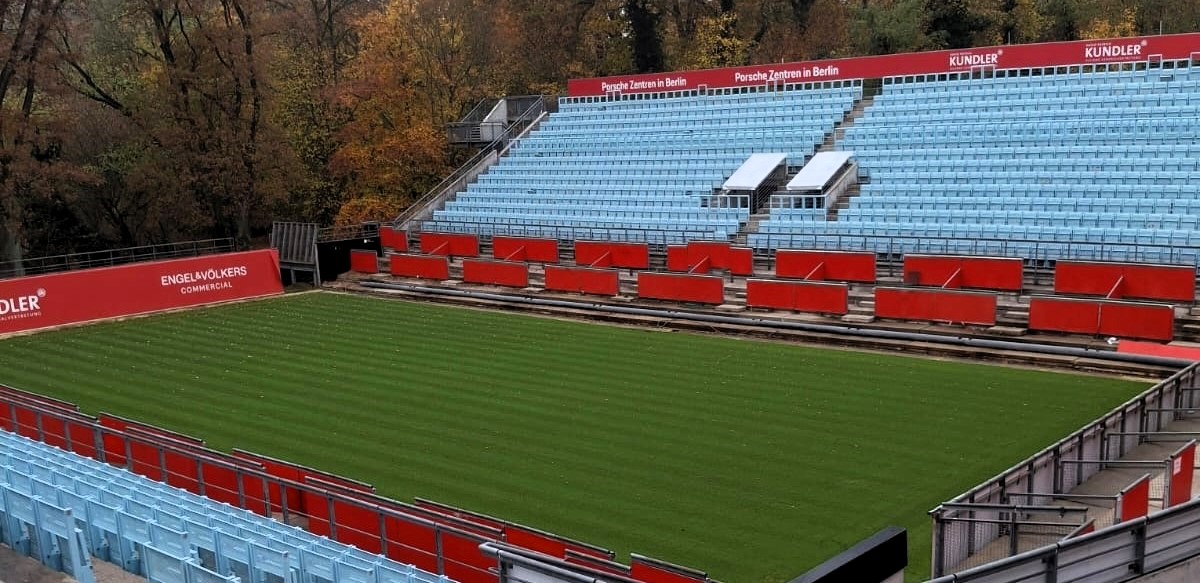
The stadium court
With November marking our first anniversary of CTC membership, I was lucky enough to visit the Lawn Tennis Turnier Club Rot Weiss (more commonly referred to as LTTC Rot Weiss) in Grunewald, a leafy green suburb of Berlin.
Once away from the main thoroughfare between the city centre and Potsdam, quiet tree-lined avenues provide an impressive promenade towards the club entrance, the club boundaries rubbing shoulders with consulates and diplomatic homes. Surrounded by woodland and Lake Hundekehlesee, the club grounds are an oasis. Both intimate and elegant, it is a virtual paradise devoted to tennis. It would be hard to imagine a more perfect setting.
The clubhouse looks out onto 16 superb clay courts, three grass courts, including a stadium court with a seating capacity for 7,000 spectators, and eight indoor clay courts. The clubhouse has two levels — an upper level with a bar and bistro, and a lounge with a large projected screen. There is also a terrace with views over the courts and the adjacent lake. The lower level has a larger restaurant.
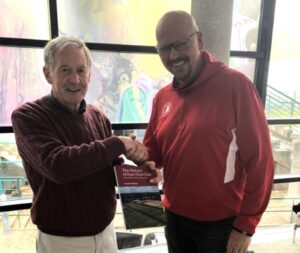
David Barham with Lutz Mueller
My contact, club coordinator Lutz Mueller, warmly welcomed me and was happy to provide more details about the club and some background history. As the name suggests, the club originally focused on tournaments and competitive tennis. The addition of Rot Weiss comes from the colour of the ribbons tied around the boater hats, which were once worn by both players and spectators alike in earlier days. These colours continue to identify the club today.
Formed in 1897, Rot Weiss quickly established itself not only as the leading club in Berlin but also within Germany, hosting the national championships from 1911 onwards. During the inter-war years, a golden era for tennis, the club would produce several top players: Otto Froitzheim, Daniel Prenn, Henner Henkel and the legendary Gottfried Von Cramm, to name but a few.
A member since 1984 and perhaps the club’s most recognised player, holding 22 grand slam titles, is Steffi Graf, after whom the stadium court is named.
Although today, Rot Weiss has broadened its original concept and now offers a variety of tennis and social activities, competitive tennis remains at the club’s heart. Rot Weiss fields successful men’s and women’s teams in the National Tennis Bundesliga. They also have teams in age groups from juniors to seniors, including an over-eighties team, competing in national and regional leagues and competitions.
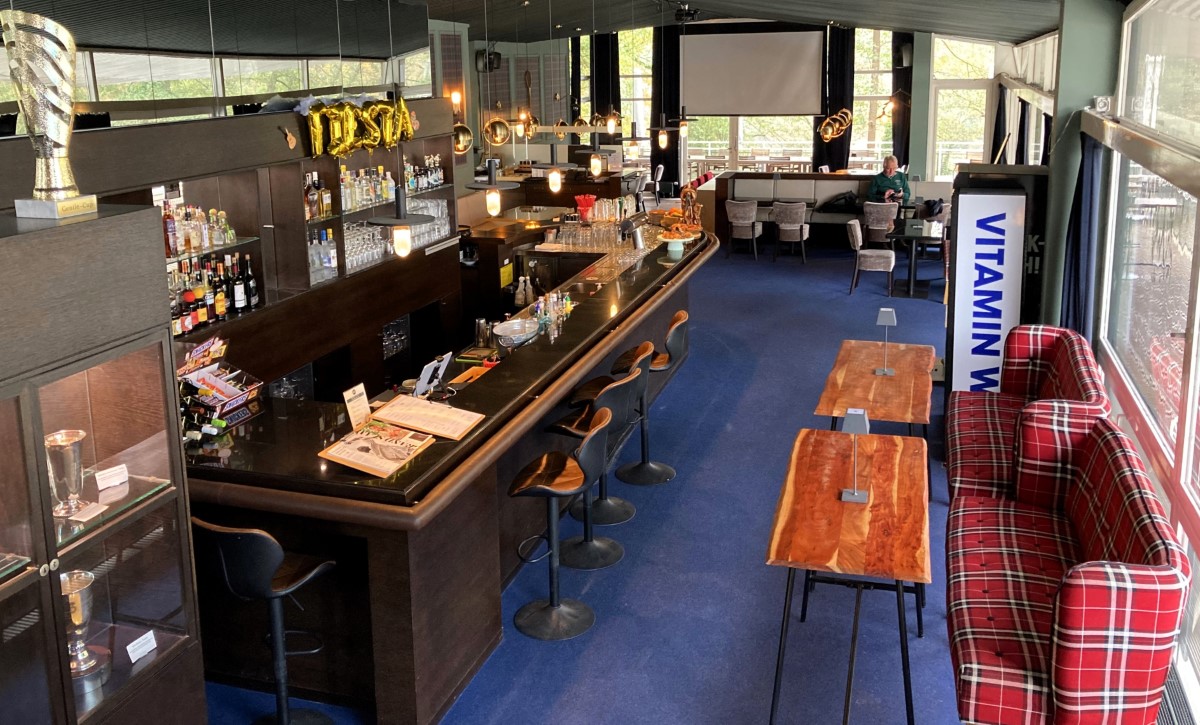
Inside the clubhouse
With the support and assistance of the All England Club, with whom Rot Weiss has established close ties, the club has laid down three excellent grass courts, which the club claims to be the best in mainland Europe.This project was completed in 2020. The following year, the WTA German Open returned to this venue as a grass court tournament, attracting the best women in the game each May, with Petra Kvitova lifting the 2023 title.
When the CTC was established in 1996, Rot Weiss became one of the founding member clubs. The following year, it hosted the first seniors tournament. CTC events form an essential part of the club’s annual schedule, recognising the value of an association promoting friendship through tennis
Following a tour of the grounds and armed with a better knowledge of the club, I enjoyed lunch in the club bar and bistro. I was warmly welcomed by the staff, who were eager to engage in conversation about tennis.
In the afternoon, Lutz was kind enough to hit some balls with me on one of the indoor courts. As well as being part of the management team, Lutz is also an accomplished coach, which quickly became evident with a display of polished strokes and elegant style.
The day concluded with a traditional German coffee and cake in the clubhouse, providing time to reflect on a memorable visit to a club with a rich history. Also, a club which offers some of the finest facilities and activities for its members, together with a vision for the future. The club motto is “We live tennis, ” which certainly seems appropriate. My thanks to all at Rot Weiss. Visit the club’s website.
The legacy of Gottfried Von Cramm
Before concluding my review, it would be remiss not to make further mention of Gottfried Von Cramm, who is very much intertwined with LTTC Rot Weiss, having been a lifelong member and patron.
Von Cramm moved to Berlin at age 18 and joined Rot Weiss with the aspiration of honing his tennis skills, which he most certainly did. By 1932, he had become a regular German Davis Cup team member. Over the next five years, he would win several grand slam titles in all three disciplines, singles, doubles and mixed. Von Cramm’s misfortune, however, was to come to prominence at precisely the same time the Nazi party came to power.
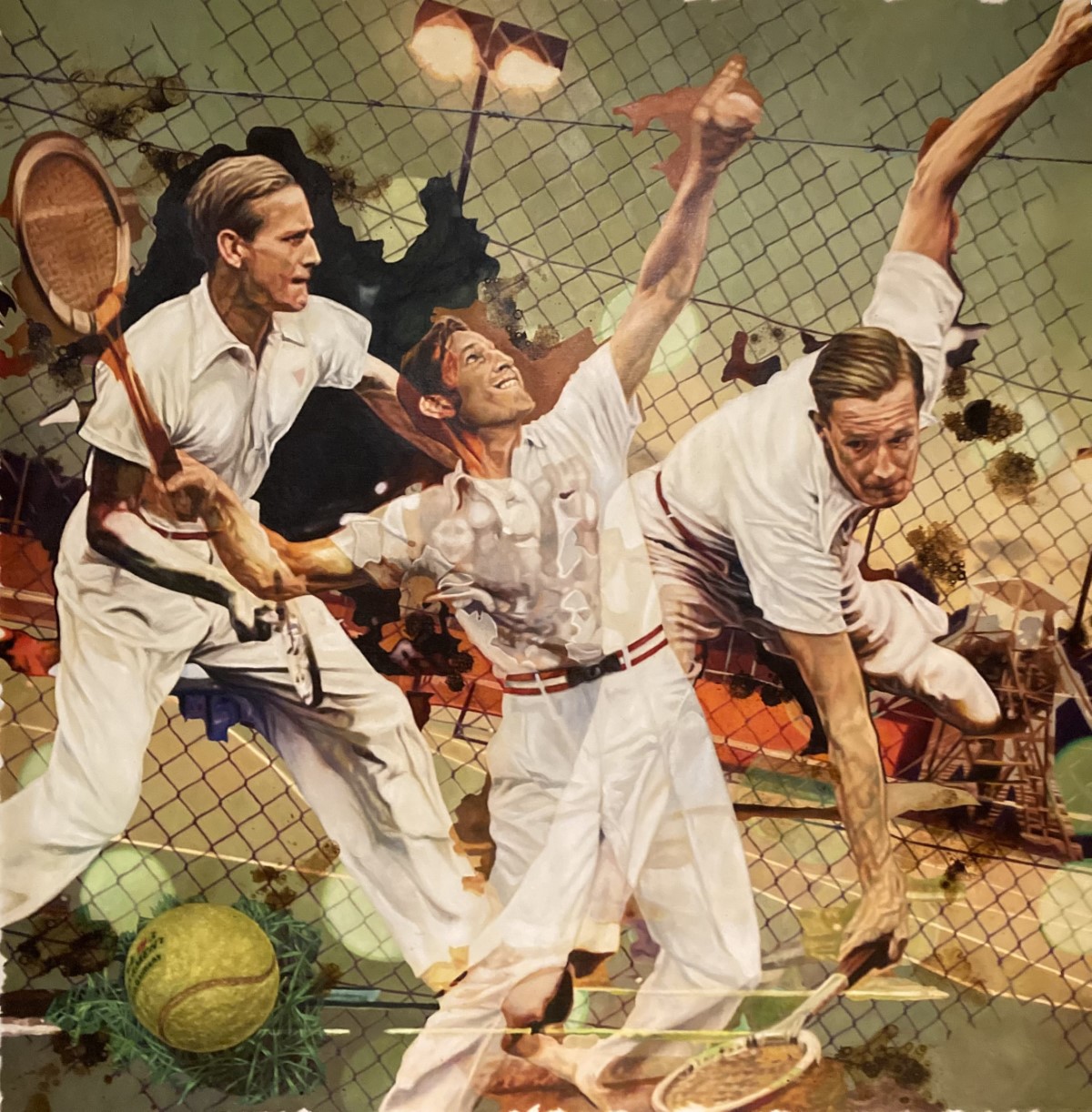
Gottfried Von Cramm
Fitting the stereotypical Aryan image of Nazi ideology, he would come under immense pressure to conform to and promote the party line. Not only did Von Cramm steadfastly refuse to become a party member or propaganda tool, but he also was critical of the regime. Consequently, he would be persecuted, arrested and imprisoned. Conscripted into the army, he was deployed to the eastern front and evacuated with severe frostbite before finally being dismissed as a criminal and unfit for service.
During those years, he would lose two brothers and his former doubles partner Henkel, who would perish at Stalingrad.
Although a member of the failed plot against Hitler, he would survive the war. Being known to the allied occupation forces and with his reputation intact, Von Cramm secured the early release of Rot Weiss back to its members. Like most of Berlin, the club had suffered extensively from air raids. The buildings had been totally destroyed, and the grounds severely damaged. Making funds available for reconstruction, it would not be an exaggeration to say that Von Cramm both preserved and revived the Rot Weiss Club.
With the establishment of the Federal Republic and Germany’s rehabilitation into international sport, Von Cramm would make one final appearance at Wimbledon in 1953. Now in his early forties, he would lose in the first round but received a standing ovation both before and at the conclusion of the match. A fitting epitaph for one of the finest players of his age.
Von Cramm would receive the Silver Laurel Leaf, Germany’s highest sports award. That was almost certainly awarded as much for his stand against tyranny as for his sporting achievements. In his honour, his adopted city of Berlin would rename the street leading to the Rot Weiss Club, Gottfried Von Cramm Weg. In 1977, one year after his untimely death, Von Cramm would be inducted into the Tennis Hall of Fame.
Von Cramm is also remembered at his own club as well. An alcove leading to the clubhouse restaurant, aptly named the Grand Slam restaurant, has a mural dedicated to his memory. Some of his trophies are also on display.
In a time when chivalry was the norm in tennis, Von Cramm was the consummate sportsman. Modest in victory, gracious in defeat. Had he lived to see the establishment of the CTC, he would undoubtedly have endorsed their founding principles and aims: international friendship through tennis, together with upholding the tradition of the game and spirit of fair play.
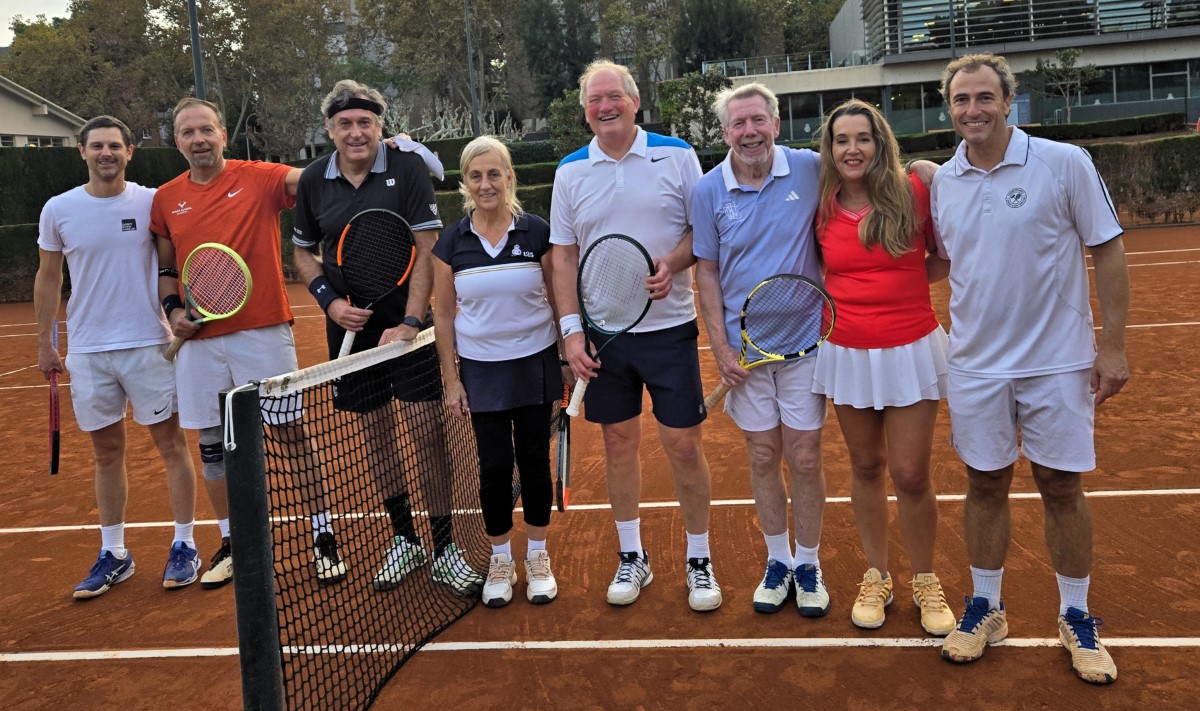
East Glos tennis chair David Roper (fifth from left) enjoys a game with fellow CTC representatives at the AGM in Barcelona
There are now 89 affiliated clubs in the CTC association, in 24 countries on five continents. To date, East Glos members have visited seven of those clubs in five countries and on three of the five continents. This includes the men’s over 65s team, which played at Queen’s Club in the national seniors knockout competition, our first match against another CTC member club.
In reaching this landmark, club members have travelled an estimated 33,172 miles. All of these visits will have raised the profile of East Glos and established links that will develop in the future.
East Glos tennis chair David Roper recently attended the CTC annual general meeting in Barcelona. This was not only another opportunity to bring awareness of East Glos to a wider tennis community, but to truly emboss our membership of the CTC. David also explored potential opportunities for greater involvement in future. We look forward to hearing more about this.